What Enterprise Leaders Should Know From AI Conference Insights
What Did Andrew Yang Observe at the AI Conference?
Andrew Yang, entrepreneur and prominent AI commentator, recently shared observations from a major artificial intelligence conference that sparked discussion about where enterprise AI is headed. Yang highlighted several emerging trends that suggest the technology landscape is shifting faster than many business leaders realize, particularly around how organizations are deploying AI tools across operations and the skills gaps widening in the workforce.
His takeaways centered on three critical areas: the acceleration of enterprise AI adoption beyond pilot projects, the growing urgency around workforce displacement concerns, and the disconnect between what technology companies are building and what businesses actually need to implement successfully. These observations matter because they reflect real challenges your organization will face within the next 12-18 months, regardless of industry.
Why This Matters for Your Business Strategy
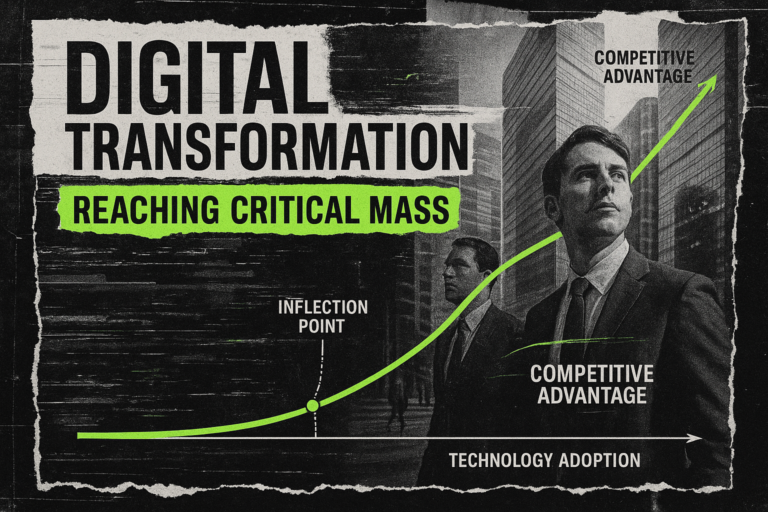
Yang’s conference insights align with broader findings from McKinsey’s latest AI research, which shows that 55% of organizations have adopted artificial intelligence in at least one business function, yet most struggle with scaling beyond initial experiments. The gap between early adopters and the majority of enterprises is widening—companies that act now on AI implementation are pulling ahead, while others risk competitive disadvantage. This isn’t speculative; it’s happening in real time across sales, customer service, legal review, and financial analysis.
The workforce angle Yang emphasized deserves particular attention. According to the World Economic Forum‘s Future of Jobs Report, AI and automation will displace 69 million jobs globally by 2025, but create 97 million new roles. That net gain means nothing if your organization isn’t prepared to retrain existing employees or recruit differently. Finance directors need to budget for this transition. HR leaders need hiring strategies that account for AI-adjacent skills. Executives must decide now whether your company leads the AI transformation or gets left behind by it.
What Should HR Leaders Do Immediately?
• Audit your current workforce for AI-adjacent skills. Identify employees who understand how to work alongside AI tools, manage AI projects, and adapt to automation. These people are your internal champions—invest in their development and make them mentors for others learning to use enterprise AI in their roles.
• Create a transparent AI skills training program. Don’t wait for artificial intelligence tools to break your workflows. Partner with learning platforms or vendors now to teach teams how to integrate AI into daily work. Start with high-volume functions like customer service, data entry, and basic research tasks.
• Revise job descriptions to include “AI collaboration” as a core competency. When you hire for new roles, explicitly state that successful candidates will work with AI tools. This signals to existing staff that adaptation is expected and helps you attract people who won’t resist automation.
• Establish an “AI reskilling” pipeline for at-risk roles. Identify positions most vulnerable to automation and create clear pathways for those employees to transition into new roles that require human judgment—management, client relations, strategic planning, ethical oversight of AI tools.
What Should Executives Prioritize?
Your immediate strategic priority is deciding your AI adoption speed. Fast followers who implement proven enterprise AI solutions now will compound advantages over the next two years. This doesn’t mean rushing into unproven technology; it means investing in artificial intelligence tools with clear ROI and clear implementation timelines. Set a board-level AI committee if you haven’t already. Assign accountability. Allocate budget specifically for AI infrastructure and training, separate from normal IT spending.
Second, start the hard conversation about workforce transition now, before external pressure forces your hand. Gartner research shows that organizations with CEO-led AI strategies and clear communication about transformation see 40% higher employee retention and 35% better productivity gains. Your team isn’t afraid of AI tools; they’re afraid of uncertainty. Leaders who get ahead of this narrative—explaining how AI changes their roles, what skills matter more than ever, and what retraining opportunities exist—retain talent and reduce disruption.
Key Takeaway
Andrew Yang’s conference observations aren’t predictions; they’re postcards from the future that’s already arriving—and the businesses that treat enterprise AI adoption as a strategic priority with clear timelines and workforce planning will outpace those still debating whether to act.
Sources: McKinsey & Company, World Economic Forum